

A few weeks back, our crew wrapped up a project on Dixie Lake in Clarkston, Michigan. The job was a complete teardown of an old wood seawall and replacement with new corrugated steel sheet pile. The original wall had given everything it had to give. The shoreline behind it was waterlogged from groundwater springs we didn’t know about going in, and by the end of the job we’d doubled the weep drainage we originally specced. This one was a fight in the best way. Here’s how it went.
About Dixie Lake, Clarkston Michigan
Dixie Lake sits in Independence Township, Oakland County, just off Dixie Highway north of downtown Clarkston. It’s an all-sports lake of roughly 75 acres with a mix of older cottages and newer year-round homes lining the shore. The lake is part of the chain of small inland lakes that make this stretch of Oakland County one of the most active waterfront markets in southeast Michigan. You can read more about Dixie Lake and the surrounding waters on the Michigan DNR website.
Like a lot of Michigan inland lakes, Dixie has shorelines that were originally walled with wood. Pressure-treated timber, sometimes oak, back when that was the standard. Most of those walls are now well past their service life. Wood seawalls on an inland lake will typically last 20 to 30 years before the freshwater rot and ice damage catch up with them. Today most of our installs are steel seawalls, both of which significantly outlast wood in Michigan conditions. The one we replaced was right on schedule.
The Old Wood Seawall: Why It Had to Go
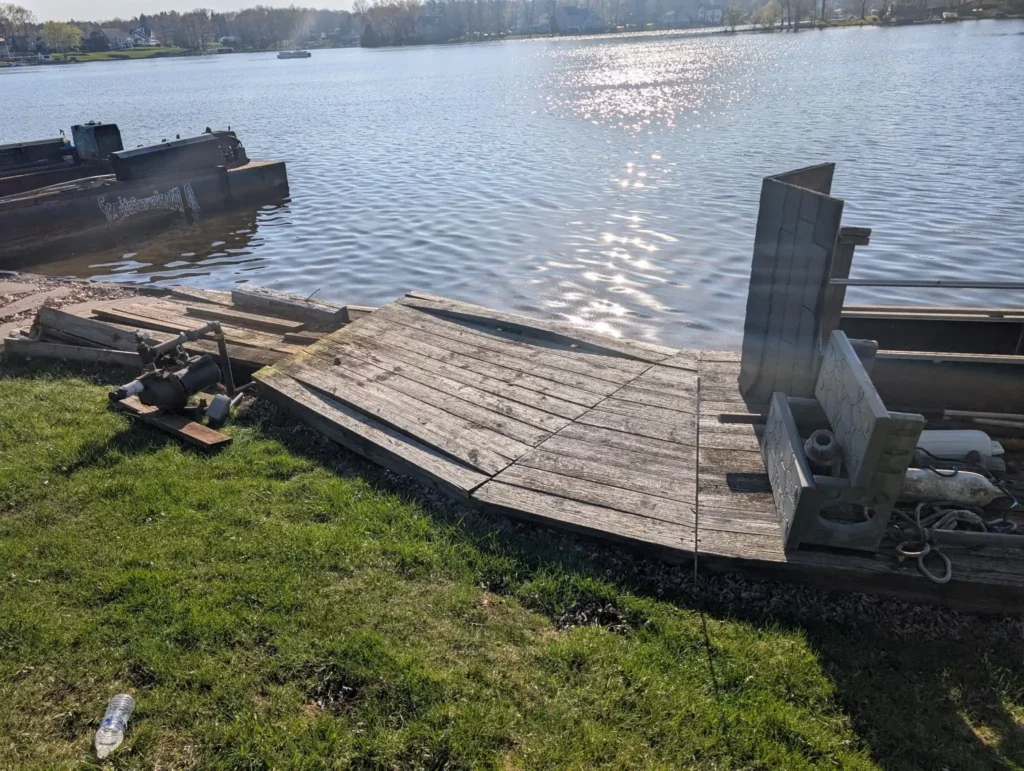
When we first walked the site, the wood seawall was in rough shape but not catastrophic, at least at first glance. The cap boards had pulled loose in several places. Decking was splitting along the grain. A few of the face boards had bowed lakeward where the backfill had been pushing against them for years with nothing to stop it. The customer had been patching it for as long as they’d owned the place. That’s usually the point where homeowners call us. They realize they’re spending real money every spring on something that won’t be there in five years anyway. For walls that still have life in them, we offer seawall repair services, but this one was past the point where repair made sense.
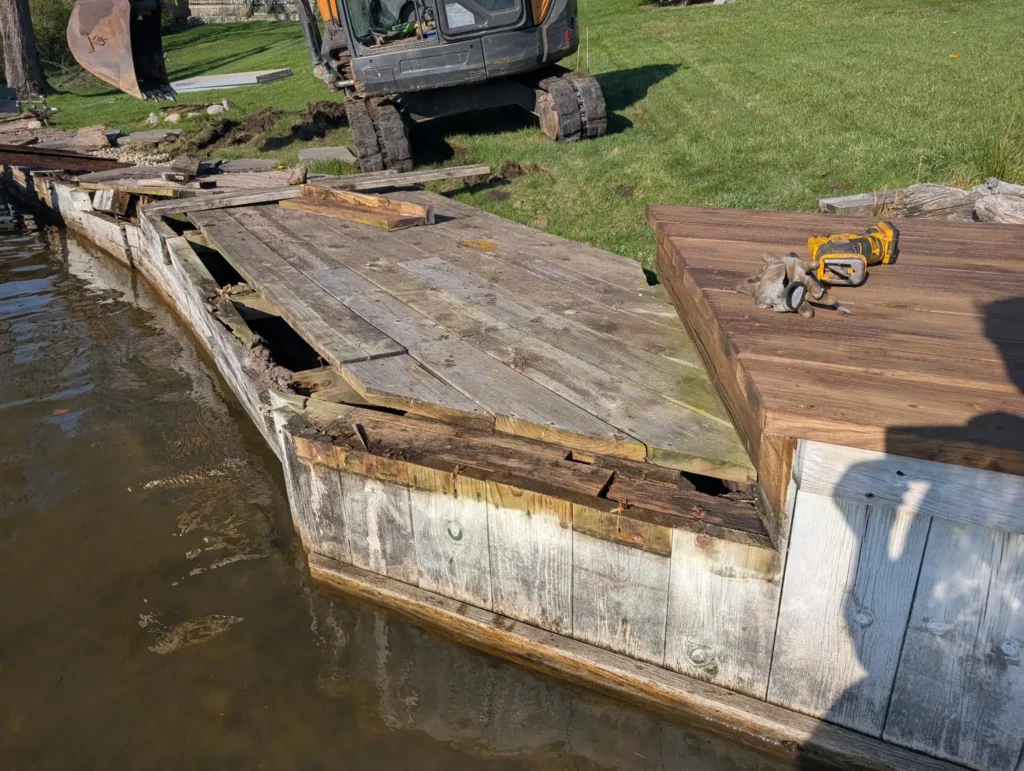
Once we got into demo, the real story showed up. The face of the old wall was holding back saturated soil that wasn’t just lake water seepage. It was active groundwater. There were natural springs running about 15 feet inland of the wall, feeding water into the upland constantly. The old wood wall had no real drainage system, so that water had nowhere to go except to pool behind the timber and slowly rot it from the back side out. By the time we had the old wall down, the upland was a mud pit you could sink a boot into past the ankle.
Permits: EGLE and Independence Township
Every seawall job in Michigan requires a permit from EGLE, the Michigan Department of Environment, Great Lakes, and Energy. That’s non-negotiable. For this project we also pulled a local soil erosion and sedimentation control permit through Independence Township, which is standard for any work that disturbs earth within 500 feet of a lake or stream.
We handle the permit process for every customer. Most homeowners have no interest in figuring out which agency wants which form, and honestly they shouldn’t have to. The EGLE permit alone can take four to eight weeks depending on the time of year, so it’s the first thing we start on once a contract is signed. By the time the crew shows up on site, every approval is in hand and we’re ready to work.
Mobilization: Barge In, Equipment On Site
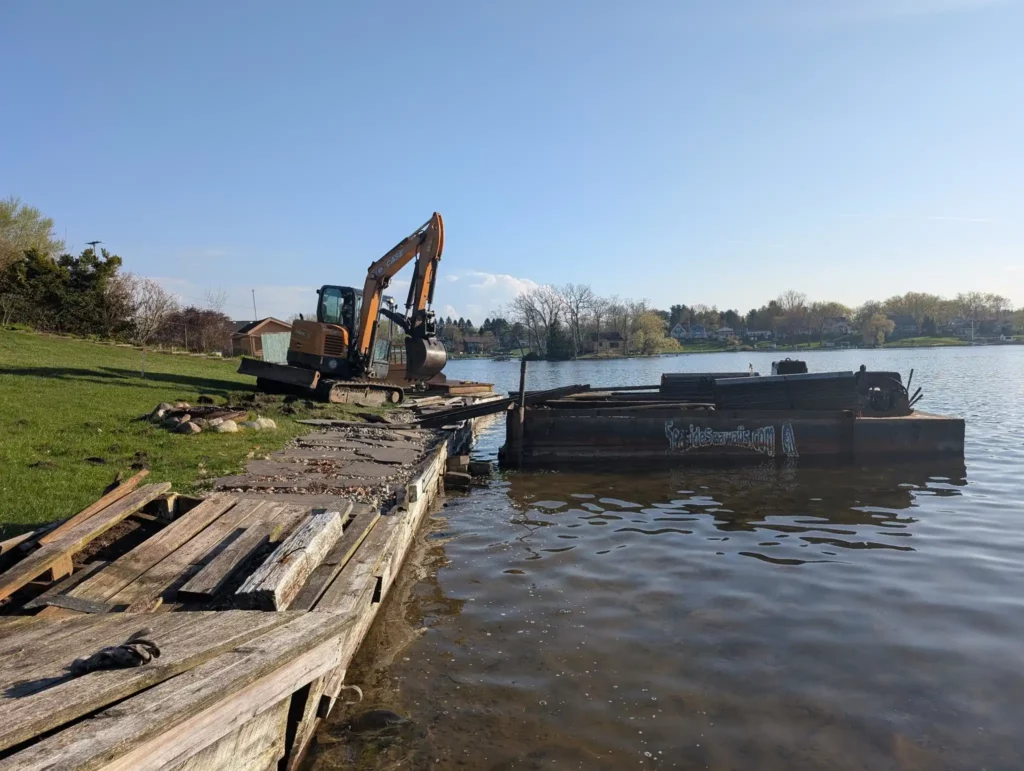
Every piece of material and equipment came in by water on our Seaside barge. That’s how we do most of our inland lake jobs. It’s faster than tearing up a customer’s lawn with a trailer route, and on a tight residential lot it’s often the only realistic way to stage a project. The barge carried in the Case CX60C excavator, the vibratory compactor attachment for driving sheet pile, all of the corrugated steel, the ledgestone for the rip rap, and the dumpster setup we’d use to haul out the old wood.
Before any tear-out started, we deployed a turbidity curtain across the work area. That’s a floating barrier that contains sediment so it doesn’t spread out into the rest of the lake when the lakebed gets disturbed. EGLE requires it, and beyond the regulatory side, it’s just the right way to work. Nobody wants their neighbors looking at muddy water for a week.
Tear-Out: Removing the Old Wood Wall and Boardwalk
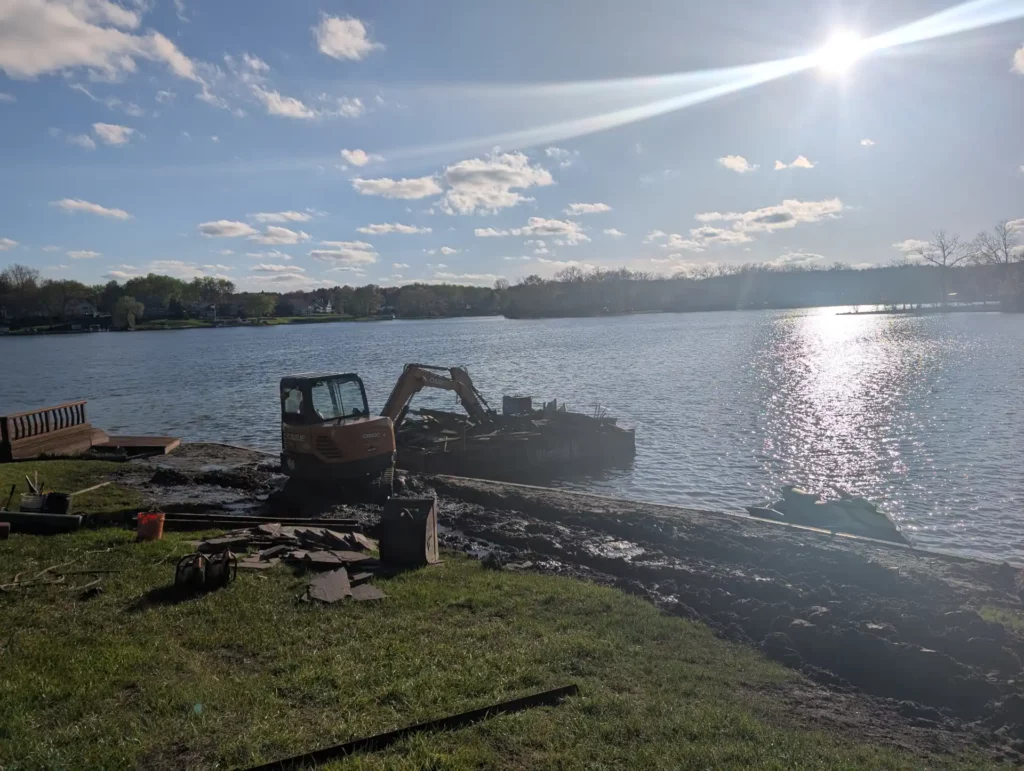
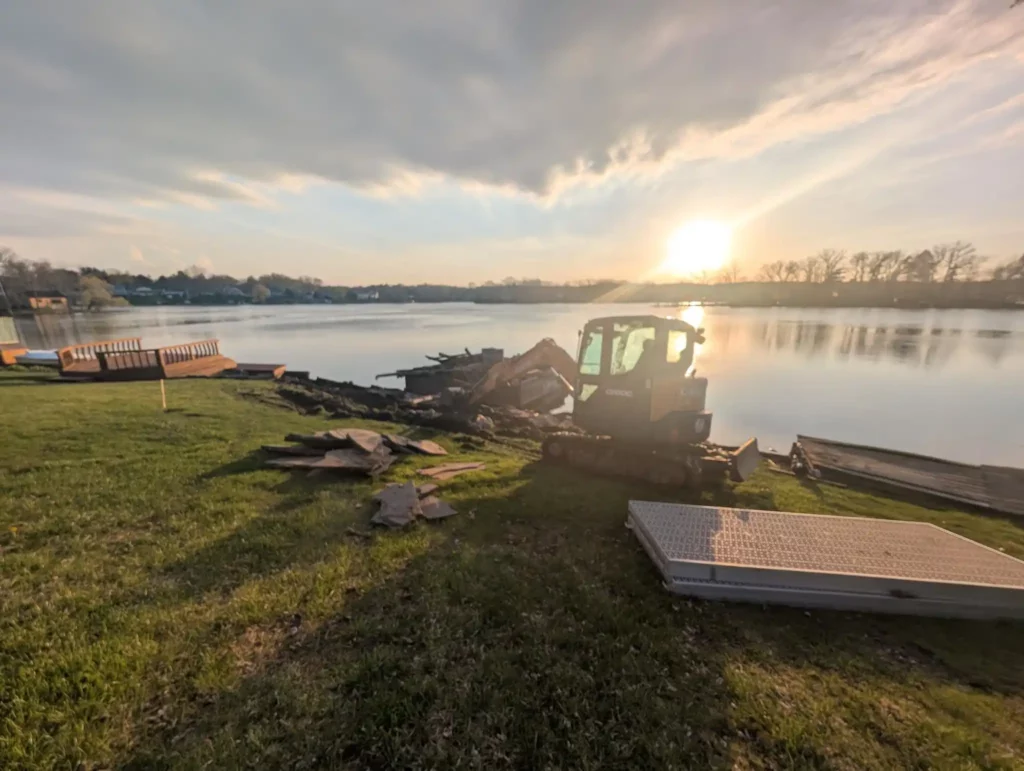
Tear-out started with the top of the existing wood seawall and the boardwalk that ran across the upland portion of the shoreline. The boardwalk was tied into the seawall cap, so it all had to come down together. We worked it from the lake side with the excavator, pulling sections free and stacking them on the barge for disposal. Every board, every fastener, every piece of failed timber left the site. None of it gets buried back into the new wall or left on the customer’s property.
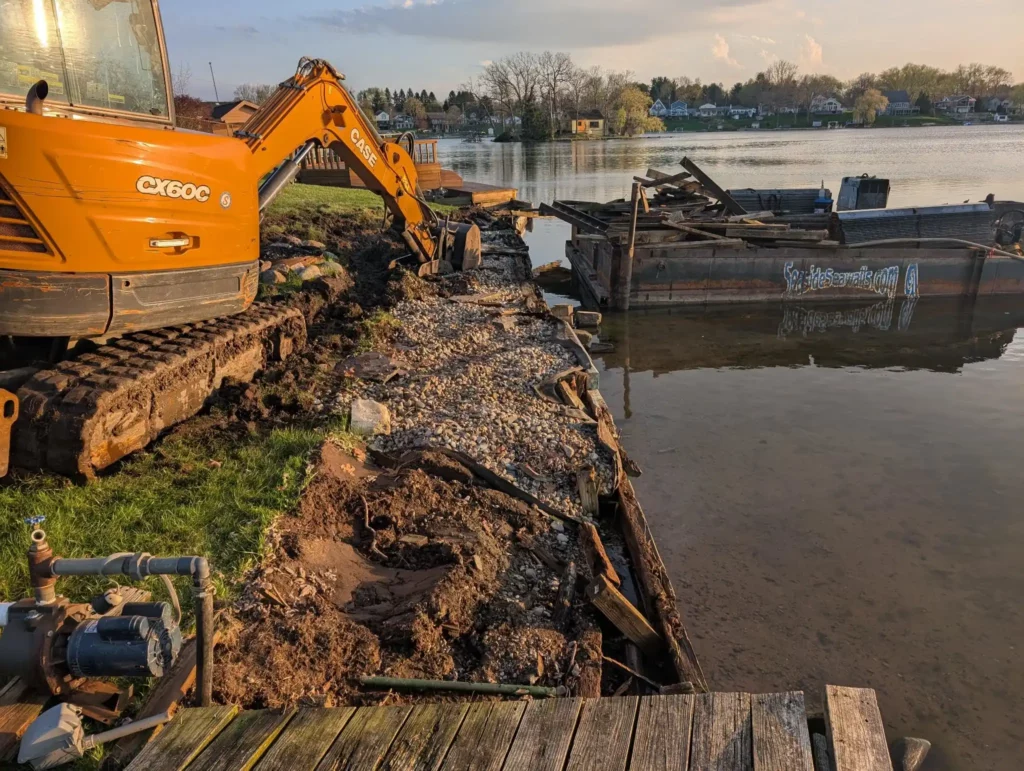
This is the part of the job that changed our plan. We knew the site had some groundwater coming in based on the walk-through, but once the wood was off and the upland was exposed, the springs were visibly running. About 15 feet inland from the shoreline the ground was constantly fed by groundwater. You could see clean water seeping up through the disturbed soil. Working in that mud was its own challenge, but the bigger issue was what it told us about the long-term design. A standard weep drain configuration was not going to be enough for this site.
Design Adjustment: Double the Weep Drainage
Weep drains are holes through the face of a seawall that let groundwater pass through to the lake side instead of pooling behind the wall. Without them, hydrostatic pressure builds up against the back of the wall and will eventually push it lakeward, no matter how well it was driven. On a typical Michigan inland lake job, we space weeps based on standard hydrology, enough to handle normal seasonal saturation. On this Dixie Lake site, we doubled it.
I made that call once I saw how active the springs were. We installed twice the number of weep holes through the steel sheet pile, with proper geotextile filter fabric on the back side of each one so the holes pass water without passing soil. That’s the difference between a wall that drains for 30 years and one that clogs in five. Doubling the weeps adds cost on our end, but it’s the right answer on a site like this. A wall is only as good as the drainage behind it.
Driving Steel Sheet Pile
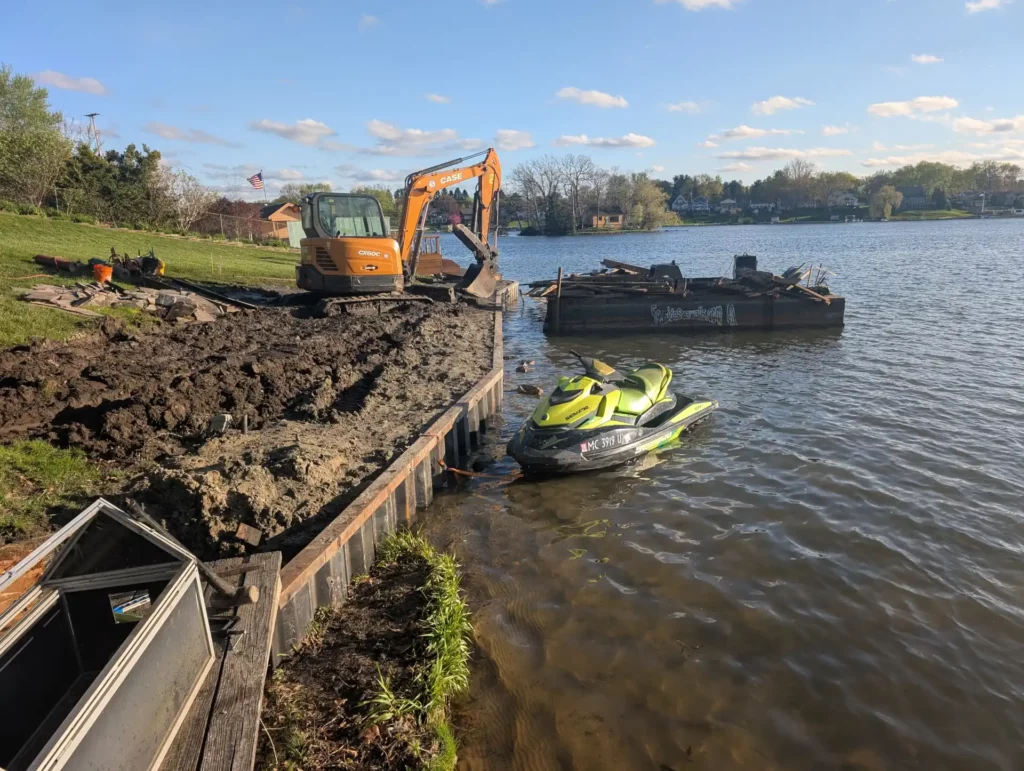
The new wall is corrugated steel sheet pile with cold-roll interlocking edges. Each sheet locks into the next, forming a continuous structural wall with no gaps and no weak joints. We drove every sheet with a vibratory compactor attachment on the Case CX60C, minimum four feet of penetration below the lakebed elevation. On this site we went deeper than the minimum in spots where the soil profile called for it. Driving depth is one of those numbers contractors will fudge to save time. We don’t. A sheet pile wall that isn’t driven deep enough will eventually walk out at the toe and lean, and there is no good fix for that short of starting over.
The shoreline at this property has a slight curve to it, which is one of the things that makes the finished wall look as good as it does. Steel sheet pile takes a gentle curve well when each sheet is set carefully against the previous one. The geometry of the corrugated profile combined with the natural curve of the shoreline gives the finished wall a much more visually interesting line than a dead-straight run of timber ever did.
Backfill and Rip Rap at the Toe
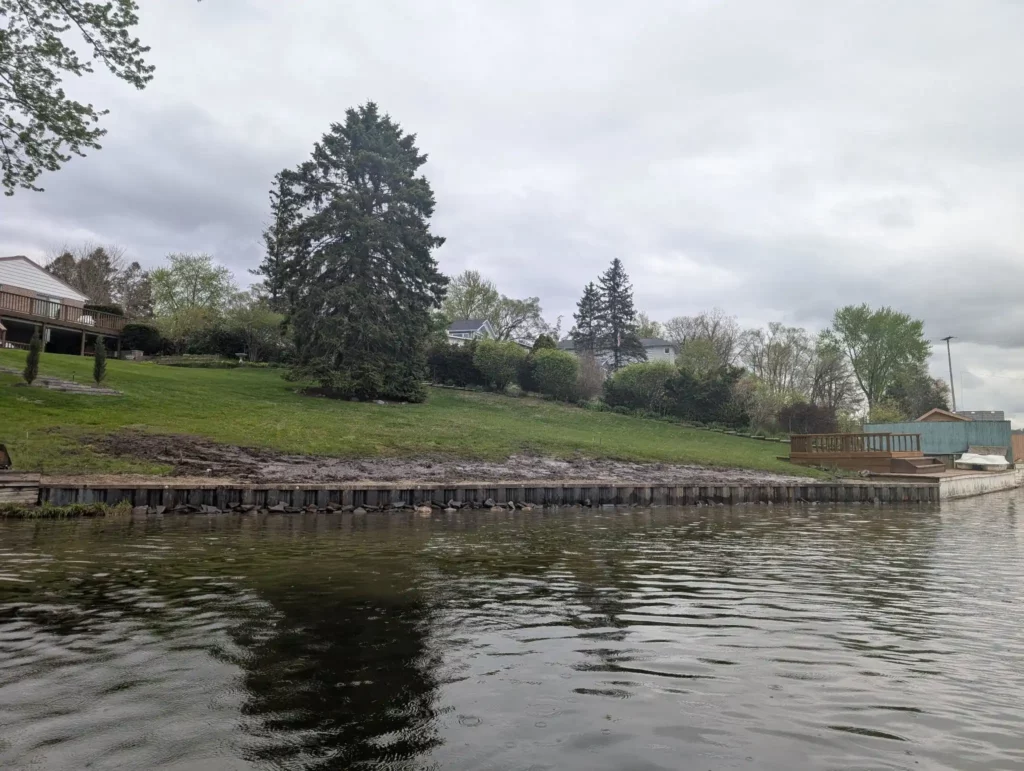
Once the steel was driven and the doubled weep holes were placed, we backfilled behind the wall with clean stone. The stone serves two purposes: it gives the wall solid structural support against the upland load, and it creates a drainage layer that channels groundwater straight to the weep holes. With the springs we found on this site, that drainage layer is doing real work every day, not just sitting there for the occasional heavy rain.
At the toe of the new wall, the bottom edge where it meets the lakebed, we placed broken ledgestone rip rap. Rip rap at the toe does two things: it dissipates wave energy before it can scour the lakebed at the base of the wall, and it provides habitat structure that improves the ecology of the immediate shoreline. We use broken ledgestone because the angular faces lock together better than rounded fieldstone, and because the natural color reads as part of the lake rather than something installed on it.
The Finished Wall
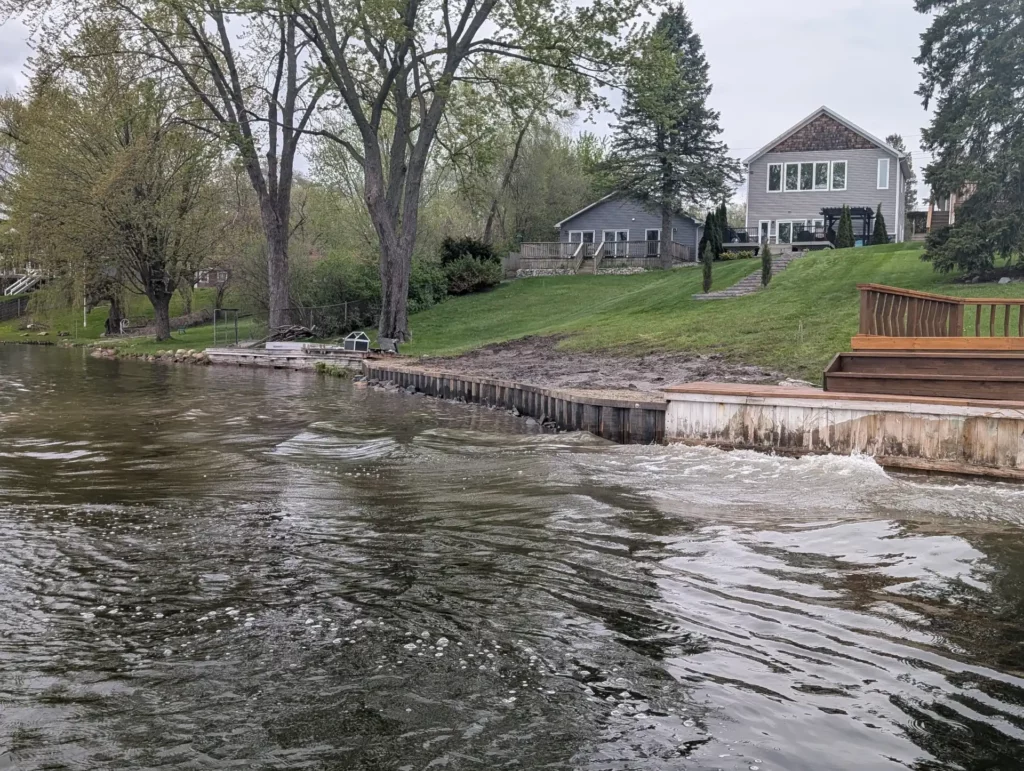
The finished wall runs an average of 75 feet in length and stands 30 inches above the lakebed elevation at the shoreline. From the lake side, the angles where the wall follows the natural curve of the property catch light differently throughout the day. It’s one of the better-looking walls we’ve installed on Dixie Lake, and the customer was happy with both the function and the finish. If you want to see another Oakland County steel seawall project we completed, take a look at our black steel seawall installation on Union Lake.
Total time on site was four to five days, start to finish. That includes tear-out, demo disposal, sheet pile driving, weep drain installation, backfill, rip rap placement, and site cleanup. Every job is different, but this is roughly what a residential seawall replacement of this scale looks like when permits are in hand and the weather cooperates.
Frequently Asked Questions
A properly installed corrugated steel sheet pile seawall on a Michigan freshwater lake will typically last 40 to 50 years or more. Freshwater is significantly less corrosive than saltwater, and steel walls in inland lake conditions hold up extremely well over time. We back every seawall installation with a 10-year warranty.
Yes. Any new seawall, seawall replacement, or significant seawall repair on a Michigan inland lake or stream requires a permit from EGLE, the Michigan Department of Environment, Great Lakes, and Energy. Most projects also require a local soil erosion and sedimentation control permit through the township or county. Seaside Seawalls handles the full permit process for every customer.
Wood seawalls on Michigan inland lakes typically last 20 to 30 years before rot and ice damage compromise the structure. Steel sheet pile walls last 40 to 50 years or more, require less maintenance, and provide stronger structural performance against backfill pressure and wave energy. Vinyl piling seawalls are another long-lasting option that works well on the right sites. For most waterfront property owners, the long-term cost of steel or vinyl is lower than replacing wood every 25 years.
A weep drain is a hole through the face of a seawall that allows groundwater behind the wall to escape to the lake side. Without proper weep drains, hydrostatic pressure from saturated soil pushes against the back of the wall and can eventually cause it to fail. On sites with active groundwater springs, like this Dixie Lake project, we install double the standard weep drainage to handle the constant water load. For a deeper look at why drainage matters on aging walls, read our piece on seawall repairs for drainage and water retention issues.
A residential seawall replacement of around 75 feet typically takes two to five working days on site, once permits are in hand. The full project timeline from contract signing to completion is usually six to twelve weeks, with most of that time spent waiting on EGLE permit approval.
Rip rap is broken stone. We use broken ledgestone, placed at the toe of a seawall where the structure meets the lakebed. It dissipates wave energy before it can scour the lakebed at the base of the wall, prevents undermining, and provides habitat structure that improves the ecology of the shoreline.
Considering a Seawall Replacement on Your Michigan Lake Property?
If your wood seawall is reaching the end of its service life, or you’re seeing the early warning signs (bowing face boards, separated cap, soft backfill, water pooling at the base), now is the time to start the conversation. Permitting takes weeks, the work has to happen in-season, and getting on the schedule early means your project lands when you want it to instead of next year.
We serve the entire southeast Michigan inland lake region, including Oakland, Livingston, Genesee, Eaton, and surrounding counties. Contact Seaside Seawalls for a free on-site consultation and we’ll walk your shoreline with you, talk through the options, and give you a real estimate.